Last reviewed: September 2026. Prices are typical UK ranges from published cost guides, not quotes. Planning rules described are for England.
Velux and dormer conversions are two of the most common types of loft conversion in the UK. Both can turn an unused loft into a usable room, but they differ in cost, space, appearance and which homes they suit. Here's a side-by-side look to help you decide what to ask about.
What Is a Velux Loft Conversion?
A Velux conversion (also called a rooflight conversion) works within the existing roof shape. Roof windows are fitted into the roof slope for light and ventilation, and the outline of the roof stays the same.
Pros of Velux Conversions
- Lower cost — typically around £22,500 to £45,000, going by 2026 guides from Checkatrade and HomeBuilding & Renovating. See our loft conversion cost guide.
- Planning permission often not needed — because the roof shape doesn't change, though it depends on your home.
- Less structural work — usually less disruption than building out from the roof.
- Quicker build — Checkatrade's March 2026 guide suggests around 4–6 weeks on site for a typical 30m² loft.
- Light — roof windows bring in plenty of daylight.
Cons of Velux Conversions
- Limited headroom — you're restricted by the existing roof pitch, and low eaves reduce usable floor area.
- Less floor space — there's no extra structure, so the room is smaller than a dormer would give.
- Not every loft is suitable — a shallow pitch or low ridge may not leave enough standing room.
What Is a Dormer Loft Conversion?
A dormer conversion builds out from the roof slope, creating a box-like structure with vertical walls and a flat or pitched roof. That adds headroom and usable floor space.
Rear dormers are the most common, though side and front dormers are possible depending on the house and local planning rules.
Pros of Dormer Conversions
- More usable space — vertical walls give full standing height across more of the room.
- Room for an en-suite — the extra space can make a bathroom practical, though that adds to the cost.
- Often permitted development — many rear dormers on houses can be built without a planning application if they meet the limits.
- Suits many homes — works on lots of semi-detached and terraced houses where a rooflight conversion alone wouldn't give enough space.
Cons of Dormer Conversions
- Higher cost — typically around £40,000 to £75,000 in 2026 guides.
- Longer build — Checkatrade suggests around 10–12 weeks on site for a typical 30m² dormer.
- More disruptive — needs scaffolding and external building work.
- Visual impact — a badly designed dormer can look out of place, so design matters.
Side-by-Side Comparison
| Feature | Velux | Dormer |
|---|---|---|
| Typical cost (2026 guides) | £22,500 – £45,000 | £40,000 – £75,000 |
| Time on site (Checkatrade, 30m²) | Around 4–6 weeks | Around 10–12 weeks |
| Usable floor space | Moderate | Larger |
| Head height | Limited by roof pitch | Full height across more of the room |
| Planning permission | Often not needed | Rear dormers often permitted development |
| Disruption | Lower | Higher |
| En-suite possible | Harder in most lofts | Often practical |
Which Homes Suit Each Type?
Velux conversions tend to suit:
- Lofts that already have enough head height — a common rule of thumb is around 2.2 metres or more from the top of the ceiling joists to the underside of the ridge
- A home office, spare bedroom or playroom on a smaller budget
- Homes where changing the outside of the roof is restricted — though listed buildings still need consent for alterations that affect their character, so check first
- Some bungalows with suitable roof shapes
Dormer conversions tend to suit:
- Semi-detached and terraced houses where a rooflight conversion wouldn't give enough space
- A main bedroom with an en-suite
- Lofts with lower roof pitches that need the extra headroom
- Families who want to make the most of every square metre
Planning Permission Considerations
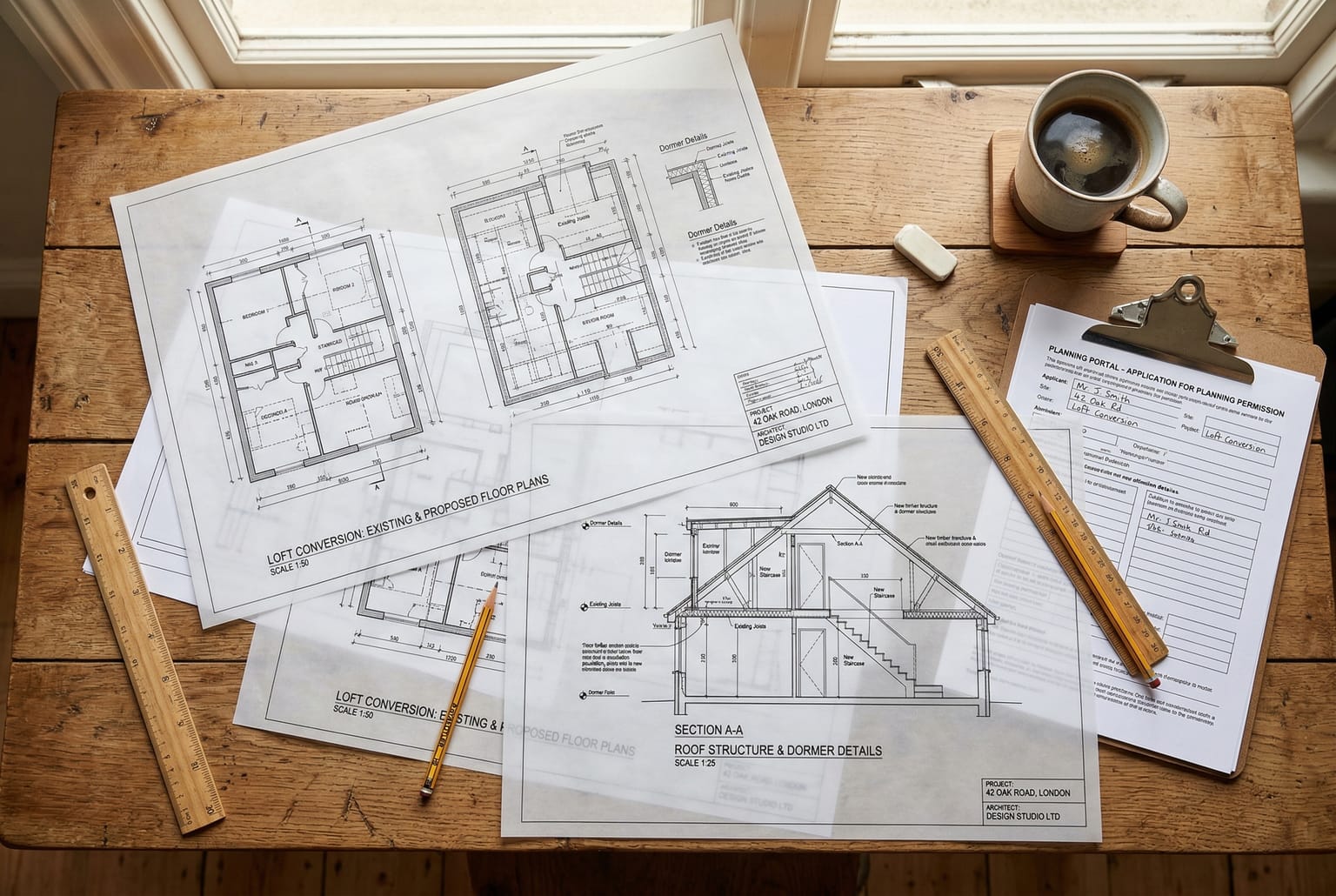
Many rooflight and rear dormer conversions on houses in England can be built under permitted development. For dormers and other roof enlargements, the Planning Portal's conditions include:
- The enlargement must not add more than 40 cubic metres (terraced houses) or 50 cubic metres (other houses) to the original roof space.
- Materials must be similar in appearance to the existing house.
- Nothing can be higher than the highest part of the existing roof, or extend beyond the roof slope facing the road.
- Side-facing windows must be obscure-glazed, and any opening part must be at least 1.7 metres above the floor.
Roof enlargement rights don't apply to flats, or on designated land such as conservation areas, and councils can remove them with Article 4 directions. Always check with your local planning authority before starting work. Every loft conversion needs building regulations approval.
Making the Right Choice
The best type for your home depends on your roof structure, your budget and what you want the space for. A loft conversion specialist or architect who has measured your loft is the best person to tell you what's realistic.
Better Lofts is an introduction service run by Better Home Hub Ltd — we don't carry out surveys or building work. Send us an enquiry and Better Home Hub will try to introduce you to a loft specialist who covers your area. It's free to use and there's no obligation. You can also browse the different loft conversion types.