Last reviewed: 2 October 2026. This guide covers England. It is general information, not a survey of your home.
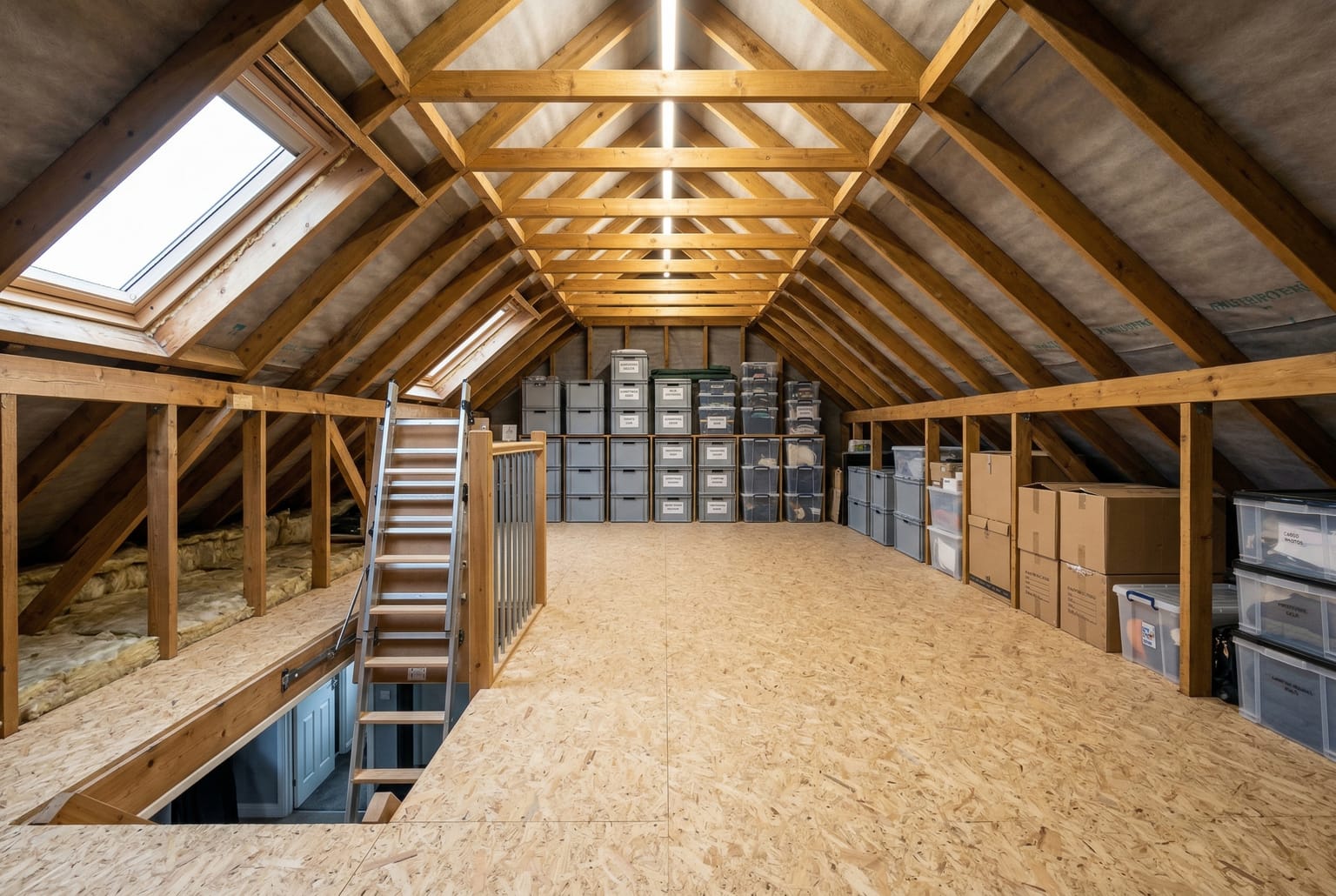
Before you convert a loft, check that the roof above it is dry, sound and able to take the work, because a conversion turns the roof into the ceiling and walls of a room you will live in. In practice that means looking for leaks and damp, asking how the roof structure will be altered, planning the ventilation, and, in homes built before 2000, finding out whether there is any asbestos in the loft before anyone starts cutting.
Why does the roof matter so much in a loft conversion?
Once a loft is converted, the roof is lined with insulation and plasterboard, so problems become harder to see and more expensive to reach. The Energy Saving Trust says that, as with any insulation, you need to make sure the roof is dry and in good condition before insulating it, and that damp problems need fixing first.
It also warns that insulating a roof "changes the way water vapour behaves", so installers have to consider the materials and keep the roof ventilated. In a converted loft, insulation usually goes between and over the rafters, and the Energy Saving Trust says installers should make sure there is enough ventilation between the insulation and the roof to stop moisture building up.
What should I look for in the loft?
You don't need to be an expert to spot the warning signs. On a dry day with a torch, look for:
- water stains or damp patches on the rafters, the underside of the roof or the loft floor
- daylight showing through the roof covering
- damp or mould around the chimney, vents or where the roof meets a wall
- sagging in the roof slope or ridge
- condensation on the underside of the roof or on metal fixings in cold weather
Better Roofing, another Better Home Hub site, has a fuller checklist of the signs that a roof needs replacing rather than repairing. If you find a leak, it is worth getting it fixed, or at least diagnosed, before the conversion is designed. Their page on roof leak repairs explains what that usually involves.
If the roof covering is near the end of its life anyway, ask your designer and builder whether it makes sense to re-roof as part of the conversion, while the roof is already being opened up and scaffolded.
Can the roof structure take a conversion?
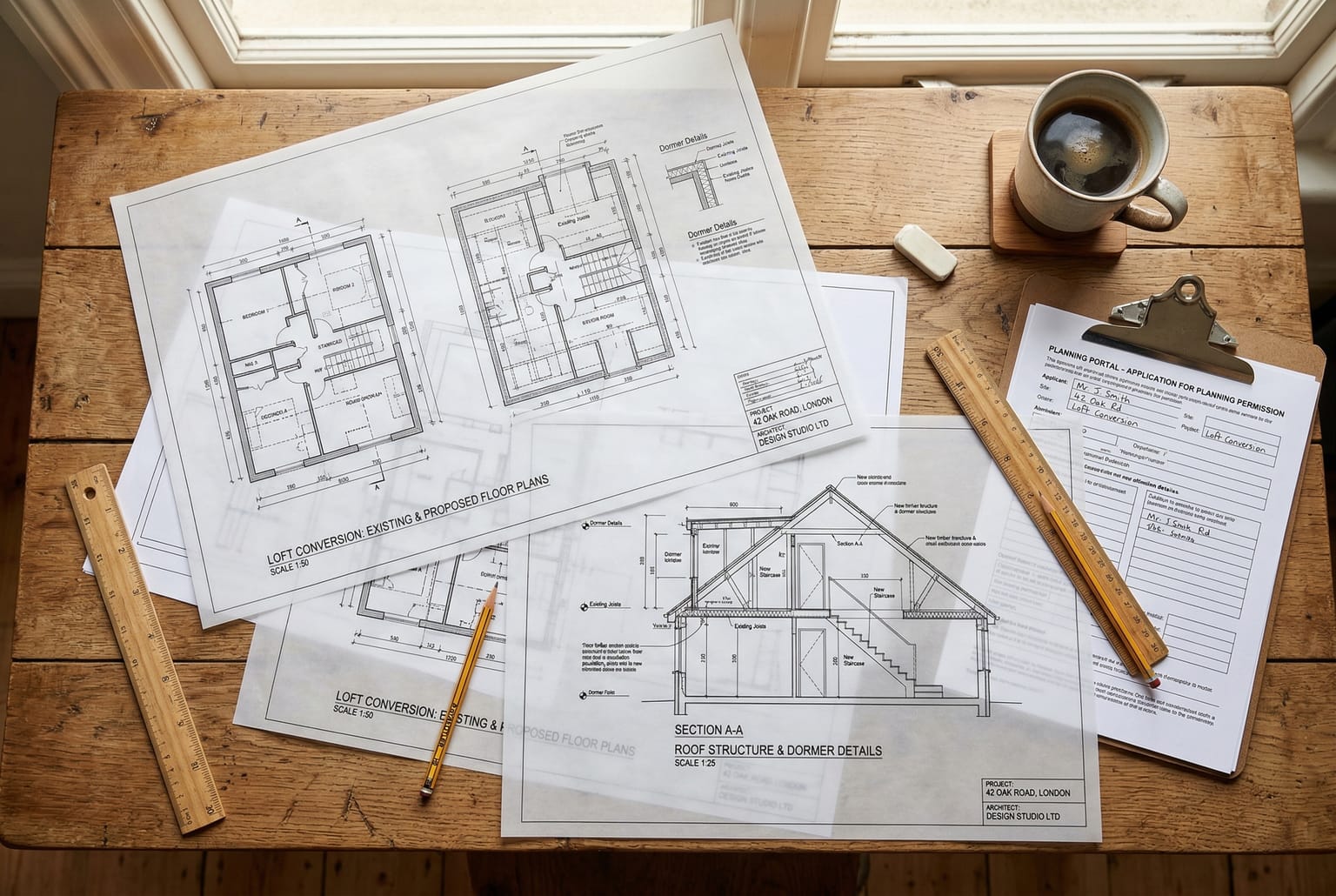
That is a question for a structural engineer, and building regulations make sure it is asked. The Planning Portal says building regulations check that the new floor is strong enough and that "the stability of the structure (including the existing roof) is not endangered". It also points out that the existing ceiling joists that form the loft "floor" were not designed for the extra load of a room.
For a rooflight conversion, the Planning Portal's interactive guide says the roof has to be able to carry the weight of the new roof light, and if it cannot, it will need to be strengthened. Dormers, hip-to-gable and mansard conversions alter the roof much more. Our guide to loft conversion types explains the differences, and our planning permission guide covers building regulations in more detail.
Could there be asbestos in the loft or roof?
In an older home, possibly. HSE says asbestos may be part of any domestic building built or refurbished before the year 2000. Its list of asbestos materials includes several you might meet in a loft or roof:
- loose fill insulation, which can be found in loft spaces and which HSE calls "probably the most dangerous asbestos-containing material"
- asbestos insulating board, used among other things for external soffits
- asbestos cement, used for roof sheets, gutters and downpipes
- textured coatings such as Artex on ceilings, which a conversion may cut into
You can't tell by looking. HSE says asbestos in good condition and not likely to be damaged should be left in place and monitored, but a conversion is exactly the kind of work that damages it. HSE also says that if you bring in builders, you should tell them about any asbestos materials in your home before they start.
For major work, HSE describes a refurbishment and demolition survey, which must find asbestos "including those hidden within the building fabric" before structural work begins. It is intrusive, and HSE says the area must be vacated while it is done. The National Asbestos Removal Centre, which is also run by Better Home Hub, explains what an asbestos survey involves and how to choose one.
Do bats affect a loft conversion?
They can. The Planning Portal says that even where planning permission is not needed, a wildlife licence may be needed if the work will affect protected species like bats. GOV.UK says it is illegal to damage or destroy a bat breeding or resting place, obstruct access to it, or disturb a bat while it is sheltering.
If you think bats use your roof, GOV.UK suggests getting a bat survey, and says the National Bat Helpline, run by the Bat Conservation Trust, can advise on small-scale works. If harm to bats cannot be avoided, a licence is needed from Natural England.
What order should the checks go in?
- Look in the loft yourself for leaks, damp and condensation.
- Get any roof defects diagnosed by a roofer before the conversion is designed.
- Arrange an asbestos survey if the house was built or refurbished before 2000 and the work will disturb the loft or roof.
- Check for bats if there is any sign of them, before work is booked.
- Have the design and structural calculations done, including ventilation, and apply for building regulations approval.
Frequently asked questions
Do I need a roofer and a loft conversion company?
Often the loft conversion company handles the roof alterations. If the existing roof has defects, a roofer's view before the design is finished can help you budget for them.
Can I insulate over a leaking roof?
No. The Energy Saving Trust says the roof must be dry and in good condition before insulation goes in, and it specifically advises against spraying foam onto the underside of a damaged or leaking roof instead of fixing it.
Is an asbestos survey a legal requirement for my house?
HSE's duty to manage asbestos covers non-domestic premises and the common parts of blocks of flats, not the inside of a private house. But HSE still advises homeowners to tell builders about any asbestos before they start, and a refurbishment survey is how asbestos hidden in the roof or ceilings is found before structural work. If in doubt, ask a surveyor before the conversion is designed.
How much does a loft conversion cost?
It depends on the type and the house. Our loft conversion cost guide sets out published 2026 price ranges.
Get free quotes from local loft specialists
Better Lofts is an introduction service run by Better Home Hub Ltd: we don't survey roofs or carry out conversions. Send us an enquiry and Better Home Hub will try to introduce you to a loft conversion specialist who covers your area and can look at your roof as part of the design.